







Floor Saw RSF 820
The all-rounder for various floor sawing jobs
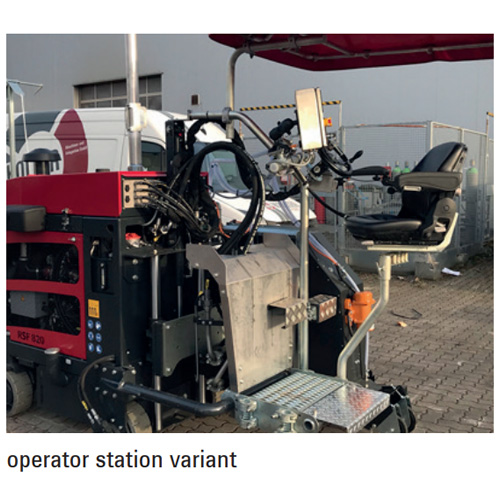
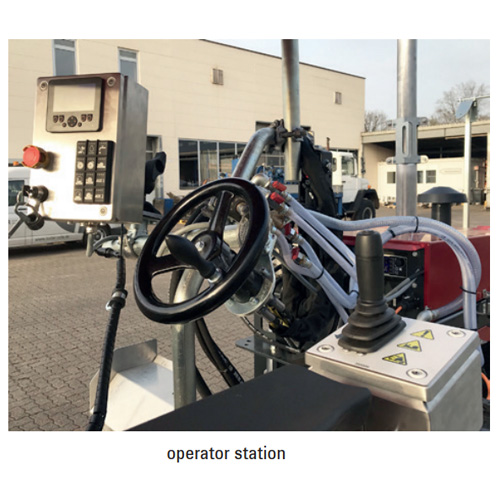
The RSF 820 can be equipped with various mounting kits and allows the user to perform multiple cutting or grinding applications with only one basic machine. Our engineers were able to draw on 40 years of experience in the development of this fully hydraulic floor sawing system. In addition to the existing expertise, special wishes and requirements of our customers were also incorporated. The RSF 820 is particularly flexible in the configuration and positioning of the operator station. Various attachment points allow mounting on all sides of the machine. Operation and monitoring are carried out intuitively via a keypad and a joystick.
Floor Saw overview
- drive motor with exhaust gas cleaning technology, installed in an extremely torsion-resistant U-frame to reduce vibration
- hydraulic feed drive and hydraulic steering improve maneuverability and comfort
- powerful main and auxiliary hydraulics for driving the system attachments
- central hydraulic cylinder and stable double column guide for mounting kits standard cut, longitudinal cut and grooving
- flexible mounting options for operator station, depending on use and/or operator requirements
- intuitive operation via joystick and keypad, display for control and monitoring functions
- all-wheel drive available on request (factory conversion only)
Durable, sustainable and smart design
Often, design features that are not visible at first glance are of elementary importance for the sustainable benefit of a working machine.
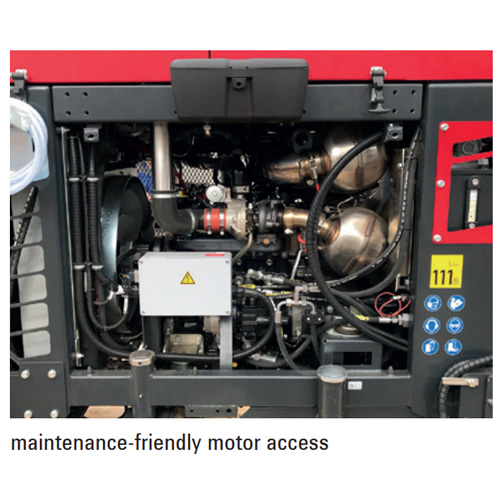
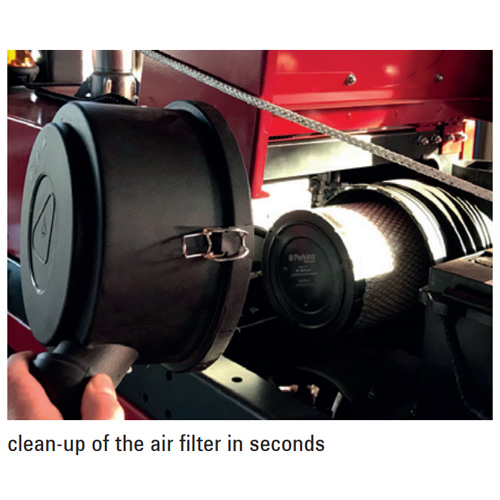
The rugged frame with mounting options on all sides or the use of high-quality and durable components as well as aggregates from reputable manufacturers are examples of this. Since particular attention was paid to the dimensions, the RSF 820 has a very compact design. Of course, the machine is also equipped with the latest exhaust gas treatment. Non-productive times for maintenance work are reduced to a minimum by an optimal access to the engine and other maintenance-relevant parts. A clean-up of the air filter consumes a few seconds only, for example.
Reliability of supply first and foremost
For sure, a defect can also occur on an RSF 820. To keep downtime as short as possible, we are building up a close-knit service network. This is how we ensure the fast and reliable supply of spare parts and services.
Customized solutions?
Even the most sophisticated machine cannot cover every conceivable application. Our experienced engineers will be happy to advise you, even on site. We adapt your machine exactly to your special requirements. Whatever challenges you have, we will find a solution together.
Specifications

Applications
The RSF 820 system can be equipped with various mounting kits for floor sawing, depending on the application requirements.
Microtrenching is a further special application which today is highly in demand.
OVERVIEW MOUNTING KITS:
Mounting kit standard cut TS 1500
- Quick change of the cutting side by pivoting the blade drive motor
- Conversion with 2000 mm blades for high cutting depths possible
- Standard and suction blade guards available in various sizes
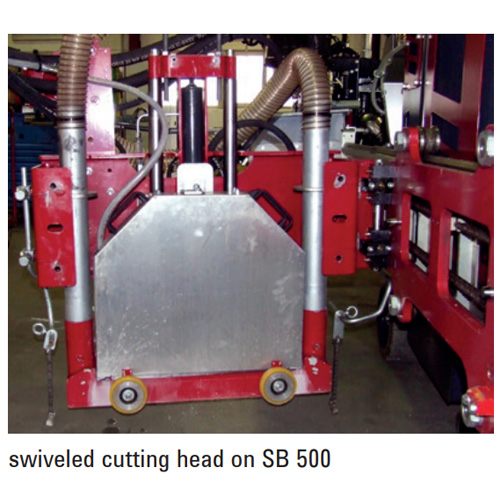
Mounting kit green concrete SB 500
- Convenient change of the saw blade due to laterally swiveling cutting head
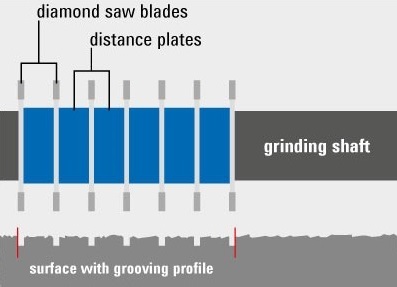
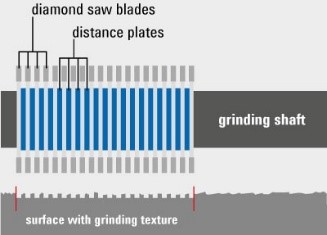
Mounting kit grooving GG 300
- Very simple and quick assembly of the mounting kit
- Changing the grinding shaft particularly easy
- Powerful suction blade guard for a clean grinding pattern without re-suction
Mounting kit longitudinal cut DB 550
- Particularly precise longitudinal joints in green concrete surfaces due to guidance in the central frame
- Cost-efficient pre-cutting/expanding and final cutting in a single pass
Slurry extraction plant VD 500
- Fully hydraulic design without vulnerable belt drive
- Application with all suction blade guards of the RSF 820 system

Related products
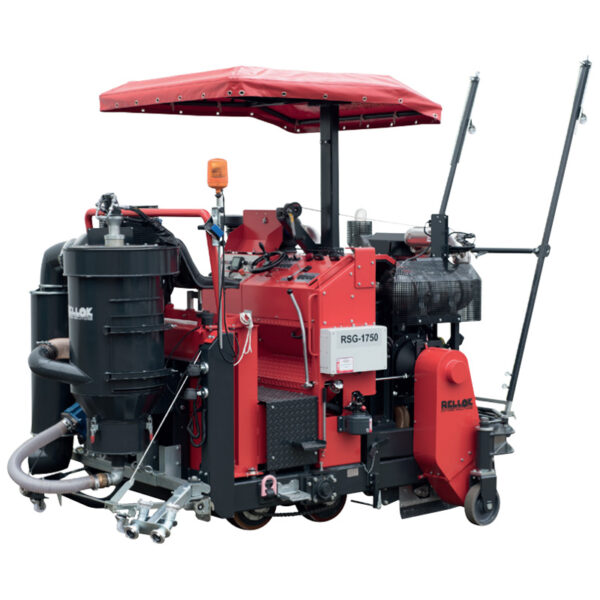
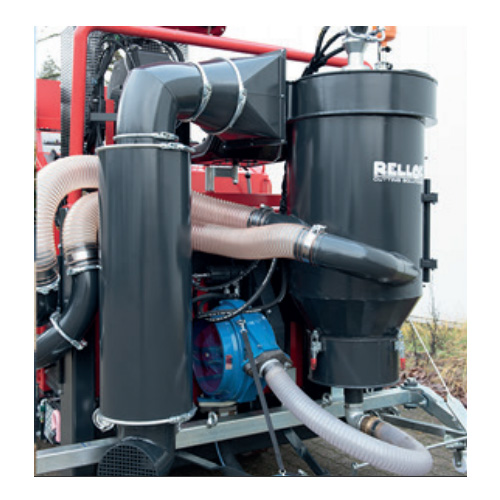
Bump cutter RSG 1750
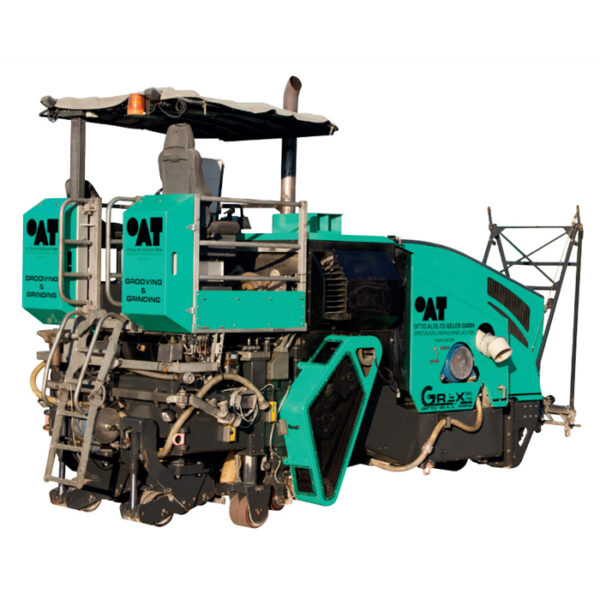

Bump cutter RSG 4600
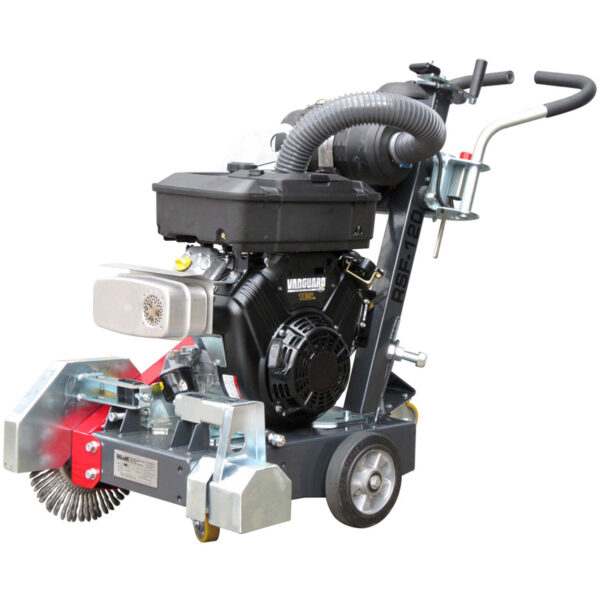
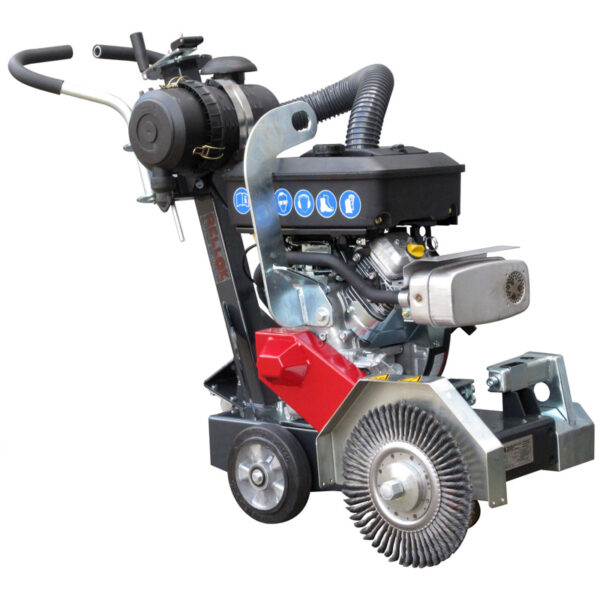
Joint Brushing Machine RSB 120
The rotating brush (rotates in reverse direction), raises loose material from inside of the joint, such as slurry or small stones, to the front. The result is a largely dust-free joint, which forms the basis for the durability of the sealing compound to be poured into the joint in the next step.
The RSB 120 is equipped with a two-stage air filter which effectively prevents the penetration of dust into the motor. The filter cartridge can be replaced without tools.